What WebAssembly Changes In Modern Audio Tools
A practical explanation of how WebAssembly impacts browser audio performance, privacy behavior, and reliability.
Browser Audio Workstation
Open the privacy-first browser audio workstation
Process audio in the browser and keep the original file off the Resodock server, which is useful for meetings, interviews, and private recordings.
What users actually feel
Faster model execution, fewer UI freezes, and more stable exports are the most visible WebAssembly benefits.
When compute happens locally, many workflows also reduce upload delay and privacy anxiety.
Back to the workstation
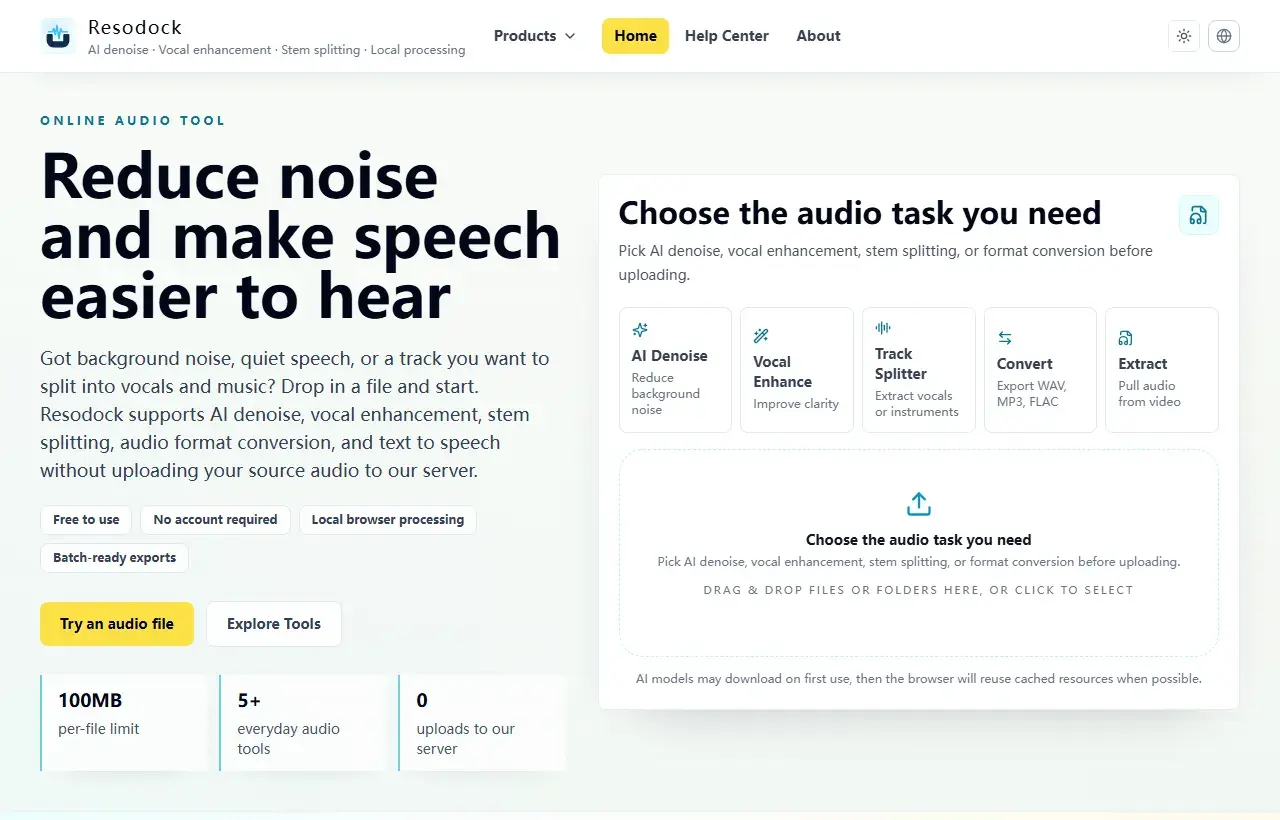
Choose a task, then upload the file
When an article mentions several workflows, the main workstation is the easiest place to start. Pick a task, upload the file, then preview and download the result.
- 1Open the Resodock workstation.
- 2Choose AI denoise, voice enhancement, stem separation, or format conversion.
- 3Upload the file and start processing.
- 4Preview the result and download it when ready.
How to judge tool maturity
Evaluate stability on mid-range devices, fallback behavior on failures, and memory handling on long recordings.
Mature tools usually provide clear progress states and recoverable task flow.
Summary
For privacy-sensitive audio work, the key question is whether the raw file leaves your device and whether storage, deletion, and network behavior are clear.
For meetings, interviews, client material, or personal recordings, prefer browser-local processing and test the flow with a sample file first.
Related Articles
Privacy & Safety
Why Local Audio Processing Is Becoming The Default
For meetings, interviews, and client recordings, local processing is not just a feature claim; it is practical risk control.
Privacy & Safety
Are Online Audio Converters Safe? 6 Checks Before You Use One
The key issue is not just SSL. It is whether your raw audio is uploaded, retained, and reused.
Privacy & Safety
How To Choose Privacy-First Browser Audio Editors
You do not need a brand list first. You need a repeatable evaluation checklist.
FAQ
Is WebAssembly always faster?
Not in every case, but for browser audio workloads it often improves compute efficiency and UI responsiveness.
How is WebAssembly related to privacy?
Its key value is local execution potential. If processing stays on device, privacy exposure can be reduced.