Acapella Extractor and Vocal Isolator Online: How to Use a Vocal Remover
Need an acapella extractor, vocal isolator, or vocal remover online? Learn when vocal isolation works, where it fails, how to use Resodock, and what to check before export.
Browser Vocal Removal
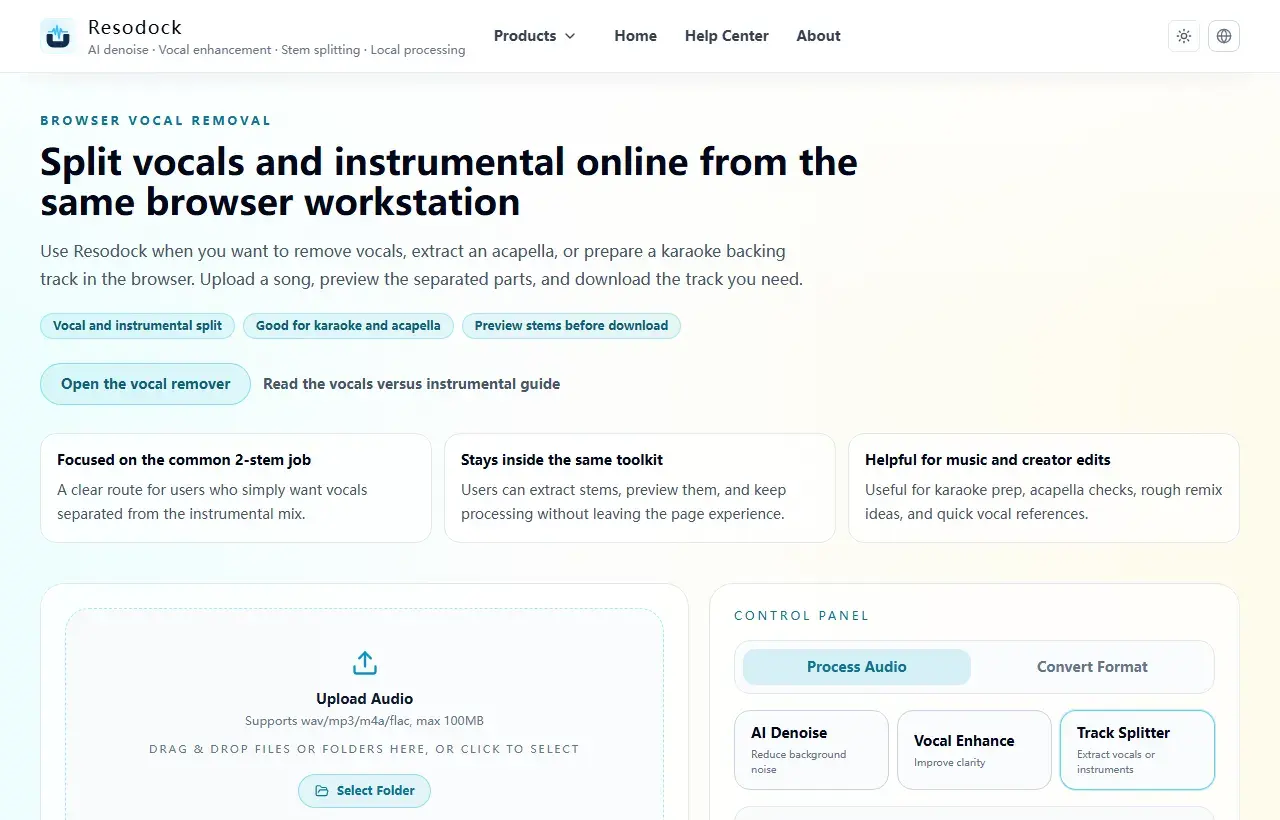
Split vocals and instrumental online from the same browser workstation
Separate vocals and instrumental online without a heavy setup. Use Resodock's browser-based vocal remover for karaoke prep, acapella extraction, and quick stem previews.
What an acapella extractor or vocal isolator does
People search for an acapella extractor or vocal isolator online when they want the vocal part from a finished song. Common reasons include cover practice, remix sketches, vocal reference, or checking a melody and pronunciation.
The vocal remover online page in Resodock splits a song into vocal and instrumental results. You can preview the vocal stem first, then download the vocal, the backing track, or both.
Split it
Separate vocals and instrumental first
When the article is about vocals, backing tracks, covers, or acapella material, two-stem separation is the fastest place to start.
- 1Open the vocal remover.
- 2Upload the music file.
- 3Start separation and let the browser generate the result.
- 4Preview vocals and instrumental separately, then download what you need.
Which songs isolate better
Vocal isolation usually works better when the vocal is centered, the backing track is not too dense, and the song does not lean heavily on reverb. A clean source file also helps. Heavily recompressed MP3s can make vocal edges rougher.
Dense synths, stacked harmonies, loud drums, and instruments that share the same range as the singer make the job harder. A vocal isolator can still create a draft, but you may hear more instrumental bleed or watery artifacts.
How to extract vocals in Resodock
Open vocal remover online and upload an audio file you are allowed to process. Start with the hardest 15 to 30 seconds of the song, such as the chorus, a dense drum section, or a part with harmonies.
After separation, listen to both vocal and instrumental outputs. For acapella, check whether instruments leak into the vocal. For karaoke backing, check whether vocal traces remain in the instrumental.
What to do when the result is limited
AI vocal isolation does not receive the original studio session. It estimates which parts of a finished mix sound like vocals and which parts sound like instruments. Some bleed, thin consonants, missing tails, or watery sound can happen.
If only one section fails, trim a shorter clip and try that part again. If the stem will go into editing or mixing, export WAV when possible instead of recompressing MP3 over and over.
Summary
An acapella extractor or vocal isolator online is useful for quick vocal drafts, practice material, and creator references. It does not perfectly recover the original studio vocal stem.
Use audio you are allowed to process, test the hardest short section first, listen for bleed and artifacts, then process the full song if the result is usable. Save WAV for further editing.
Related Articles
Stem Separation
How To Split Vocals And Instrumental Online And Export Multiple Stems
If you want vocals, instrumental, or full stems quickly, this guide focuses on mode selection and export steps.
Stem Separation
How To Isolate Karaoke Instrumental For Free
From mode selection to export format, this guide helps you avoid broken instrumental artifacts.
Stem Separation
How To Extract Dialogue From Video Clips
From media import to dialogue export, this guide focuses on the shortest reliable path.
FAQ
Can an acapella extractor make perfectly clean vocals?
Not always. Complex mixes can leave instrumental bleed or change the vocal tone, so preview the vocal stem before using it.
Is a vocal isolator the same as a vocal remover online?
The search intent is close. One focuses on keeping the voice, the other on removing it. The workflow usually creates both vocal and instrumental outputs.
Can I extract vocals from an online link?
Resodock is for audio files on your device. It does not download web videos. Use audio you own or have permission to process.